
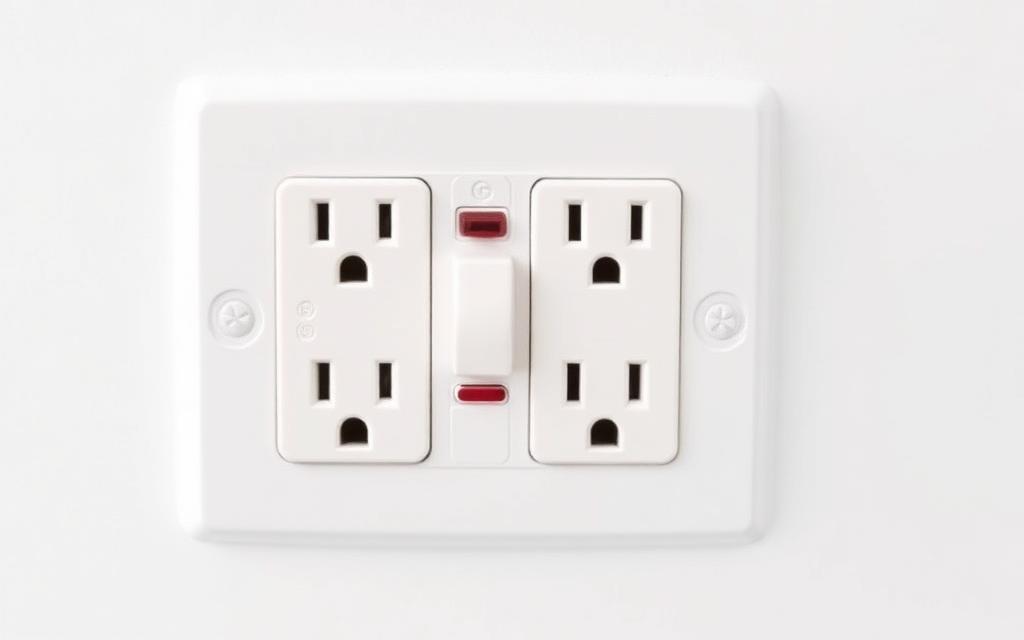
If you've ever noticed outlets with "Test" and "Reset" buttons in your kitchen or bathroom, you've seen GFCI outlets. But did you know there's another type of protective outlet — AFCI — that's equally important for home safety? Here's what Kingston homeowners need to understand about both.
What Is a GFCI Outlet?
GFCI stands for Ground Fault Circuit Interrupter. A GFCI outlet monitors the flow of electricity through a circuit and instantly shuts off power if it detects a ground fault — which is when current is flowing through an unintended path, like through water or a person. GFCIs are designed to prevent electrical shock and electrocution. They trip in as little as 1/40th of a second, far faster than a standard circuit breaker.
Where Are GFCIs Required?
Under the Ontario Electrical Safety Code, GFCI protection is required in:
• Kitchens (all countertop receptacles)
• Bathrooms
• Laundry rooms
• Garages and unfinished basements
• Outdoor outlets
• Any outlet within 1.5 metres of a sink
• Hot tub and pool areas
If your Kingston home was built before these requirements were in place, you may not have GFCI protection where it's needed. Upgrading is quick, affordable, and could save a life.
What Is an AFCI Outlet?
AFCI stands for Arc Fault Circuit Interrupter. An AFCI detects dangerous electrical arcs — which occur when damaged, frayed, or loose wiring creates sparks. These arcs are a leading cause of residential electrical fires. AFCIs are designed to prevent fires by cutting power when they detect arcing conditions, even before a standard breaker would trip.
Where Are AFCIs Required?
The Ontario Electrical Safety Code requires AFCI protection in:
• Bedrooms
• Living rooms and dining rooms
• Hallways and closets
• Sunrooms and recreation rooms
In newer construction, AFCI protection is typically provided at the breaker panel (AFCI breakers) rather than at individual outlets. However, AFCI outlets can be used as a retrofit solution in older homes where replacing the breaker panel isn't practical.
GFCI vs AFCI: Key Differences
The simplest way to remember the difference: GFCIs protect people from shock (especially around water), while AFCIs protect homes from fire (especially from damaged wiring). They serve different purposes and are required in different locations. In some areas, like kitchens, both types of protection may be required. Dual-function GFCI/AFCI devices are available that provide both types of protection in a single device.
When Should You Upgrade?
If your Kingston home doesn't have GFCI outlets in wet areas or AFCI protection in living spaces, it's time to upgrade. This is especially important if you have young children, are renovating, or are selling your home. The cost is relatively low — GFCI outlets are typically $150–$250 each installed, and AFCI breakers are $200–$350 each. It's one of the most cost-effective safety upgrades you can make.
Not sure if your home has adequate GFCI and AFCI protection? Taylor G Electric can do a quick inspection and bring your home up to current safety standards. Call us today for a free assessment.
Call 647-896-4411