
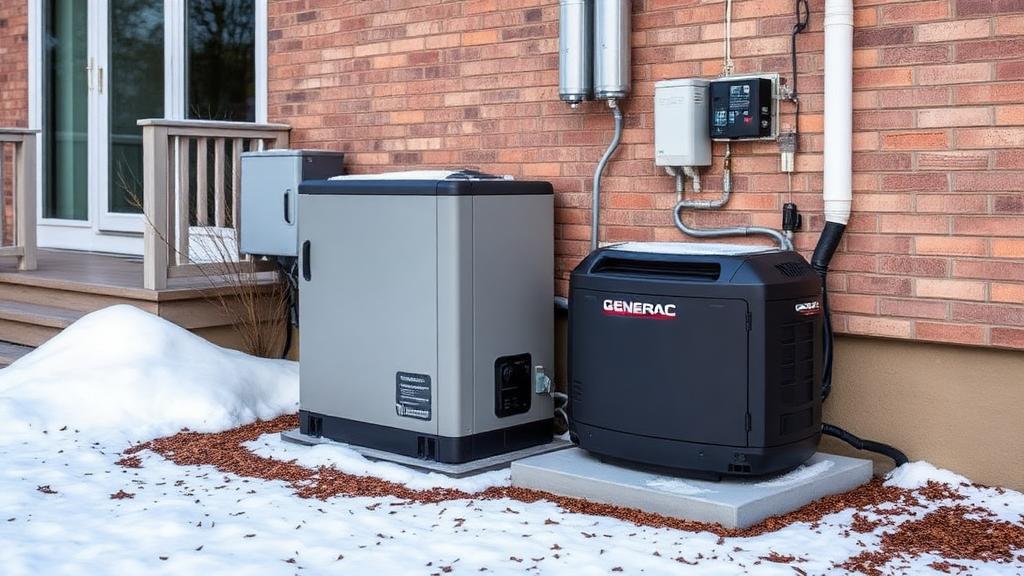
Kingston winters are no joke. Between ice storms, heavy snowfall, and high winds, power outages are a fact of life in Eastern Ontario. A home generator can keep your family safe, warm, and comfortable when the grid goes down. But with so many options available, how do you choose the right one?
Portable vs. Standby Generators
The two main types of home generators are portable and standby. Portable generators run on gasoline and need to be manually started and connected during an outage. They typically provide 3,000 to 8,000 watts — enough to run a few essential circuits but not your whole home. Standby generators are permanently installed outside your home and connect directly to your electrical panel through an automatic transfer switch. They run on natural gas or propane and turn on automatically within seconds of a power outage. For Kingston homeowners who experience extended outages, a standby generator is the clear winner.
How to Size Your Generator
Choosing the right size generator depends on what you want to power during an outage. Here's a rough guide:
• Essential circuits only (furnace, fridge, some lights, sump pump): 10–14 kW
• Most of the home (add kitchen, laundry, garage): 16–20 kW
• Whole home including AC and EV charger: 22–26 kW
We'll do a load calculation to determine exactly what size generator your home needs. Oversizing wastes money; undersizing leaves you in the dark.
Natural Gas vs. Propane
If your Kingston home has a natural gas connection, a natural gas generator is usually the best choice — you'll never run out of fuel during an extended outage. If you're on propane or don't have a gas line, propane generators work great but require a sufficiently large propane tank (typically 500 gallons or more for extended outages). We can help you determine the best fuel source for your situation.
What Does Generator Installation Cost in Kingston?
A complete standby generator installation in Kingston typically costs between $8,000 and $18,000, including the generator unit, automatic transfer switch, concrete pad, gas or propane connection, electrical hookup, and ESA permit. The cost varies based on generator size, fuel type, and the complexity of the installation. Portable generator hookups with a manual transfer switch are much less expensive — typically $1,500 to $3,000 for the electrical work.
Permits and Code Requirements
In Ontario, generator installations require both an ESA electrical permit and, for gas-fired units, a TSSA (Technical Standards and Safety Authority) gas permit. The generator must also meet local setback requirements for noise and exhaust clearance. At Taylor G Electric, we coordinate all permits and ensure your installation meets every code requirement.
Maintenance and Longevity
A well-maintained standby generator can last 15–25 years. Most manufacturers recommend annual maintenance including oil and filter changes, spark plug replacement, battery check, and a full load test. Many modern generators run a weekly self-test automatically. We recommend scheduling annual maintenance before winter to ensure your generator is ready when you need it most.
Don't wait until the next ice storm to think about backup power. Taylor G Electric has installed generators across Kingston, Napanee, Gananoque, and beyond. Contact us for a free consultation and quote — we'll help you find the perfect generator for your home and budget.
Call 647-896-4411